Cookie jar lid alarm
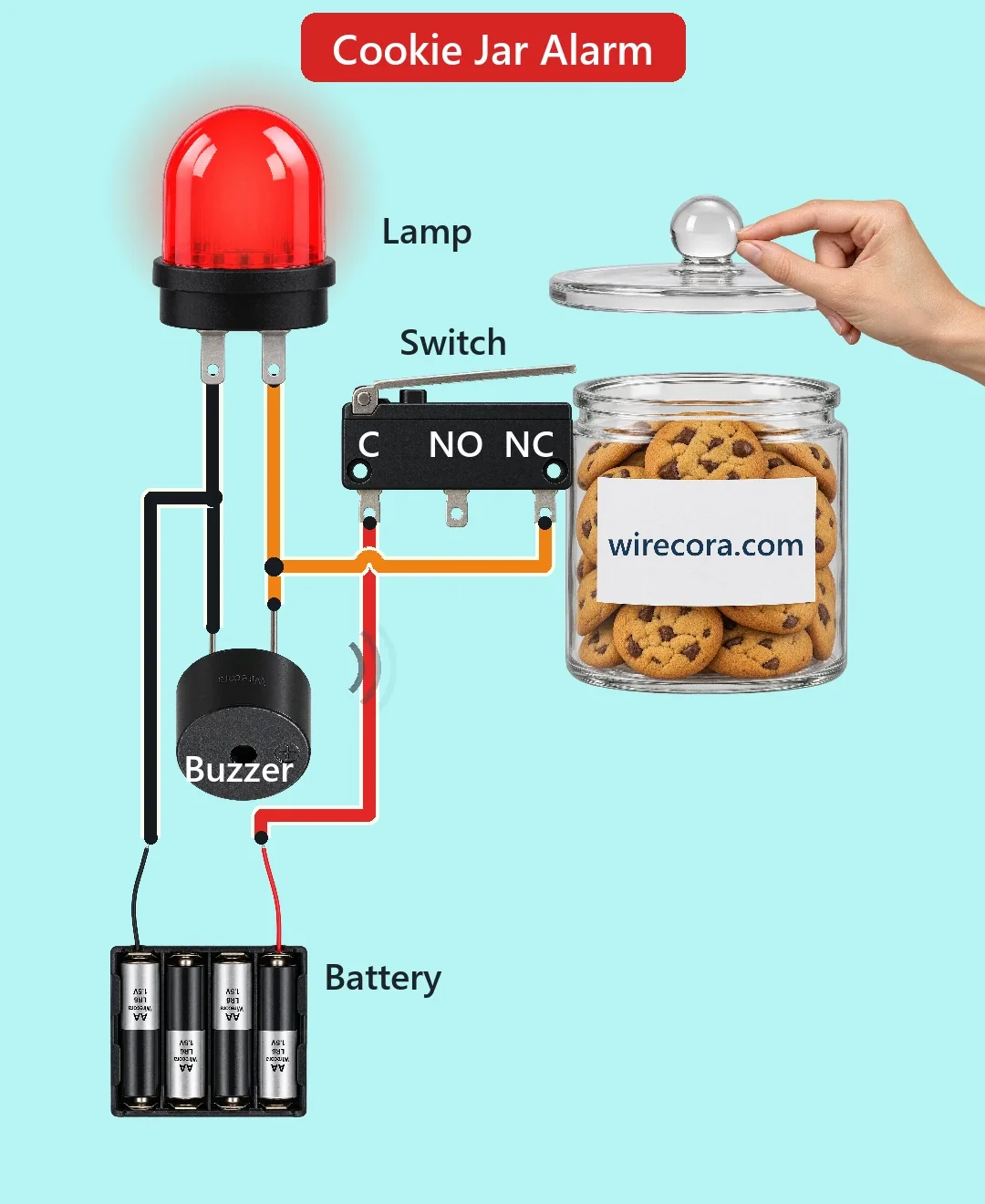
A little lever under the glass lid keeps this cookie jar quiet. Lift the lid and a red lamp and a buzzer start at once. Put the lid back and both stop. There is no chip, no transistor and no magnet.
- 4 parts
- 5 wiring steps
- No code needed
- 6 V supply
Quick answer
The short version. Every pin is in the full wiring below.What you need
- 4 x AA battery holder
- Hinge-lever micro switch, SPDT
- Red dome lamp with a 6 V 0.3 A bulb
- 5 V active buzzer
How to wire it
- Battery plus goes to COM, the tag at the hinge end of the switch (the lever's pivot).
- NC, the tag at the far end, goes to the plus of the lamp and the plus of the buzzer.
- Battery minus goes to the minus of the lamp and the minus of the buzzer.
- The middle tag (NO) stays free.
- Glue the switch to the rim so the lid edge rests on the lever.
Before you power it: 6 V from four AA cells. Keep the bare battery leads apart, because shorted AA cells get hot fast. Do not use a mains lamp or buzzer here.
Parts list
- 4 x AA battery holder (6 V)
- Hinge-lever micro switch, SPDT (Omron SS-5GL-F class, rated 5 A at 30 V DC)
- Red dome lamp with a 6 V 0.3 A bulb (a typical figure, not read from a listing)
- 5 V active buzzer (works from 4 to 8 V, about 30 mA)
Wiring, step by step
- Battery plus goes to COM, the tag at the hinge end of the switch (the lever's pivot).
- NC, the tag at the far end, goes to the plus of the lamp and the plus of the buzzer.
- Battery minus goes to the minus of the lamp and the minus of the buzzer.
- The middle tag (NO) stays free. If your switch is marked differently, find COM and NC with a continuity tester: they must not connect while the lever is pressed.
- Glue the switch to the rim so the lid edge rests on the lever.
How it works
- The lid's weight holds the lever down. With the lever pressed, the COM to NC contact is open, so nothing runs and the circuit draws no current.
- Lift the lid and the lever springs up. The COM to NC contact closes and 6 V goes straight to the lamp and the buzzer.
- The lamp takes about 0.3 A and the buzzer about 0.03 A, so about 0.33 A in all. That is far below the switch rating of 5 A at 30 V DC.
- Put the lid back and it presses the lever. The contact opens and both stop.
- Four AA cells give 6.4 V fresh and about 4 V when flat, which stays inside the buzzer's 4 to 8 V.
What the video simplifies
- The lid lift and the lever travel are drawn much bigger than real, so you can see them. A real lever moves a few millimetres.
- The parts are drawn at mixed scales. The switch is drawn large next to the jar.
- The lamp lights and fades faster than a real bulb. The 0.3 A bulb rating is a typical figure and was not read from a listing. At 0.5 A the load is still well inside the switch rating.
- A plain active buzzer gives a steady tone. The video shows short beeps, which is how a pulsing (self-interrupting) active buzzer sounds.
- The switch needs only about 0.16 N, but a very light plastic lid may still not press it. Someone who knows the trick can slide a finger under the lid and hold the lever down.
- The tag order (C at the hinge end, NO in the middle, NC at the far end) follows the Omron SS-5GL(-F) sheet. Switches from other makers can differ, so check with a continuity tester.
- There is no fuse on the 4 x AA pack. This circuit was checked on paper against the switch and buzzer sheets and was not built.
You found this by searching. Here's the whole path.
- Read how it works
- See it work
- Build it
- Show it
Next: see it work
Thirty seconds of video shows the circuit doing its job.
Then build it
6 V from four AA cells. Keep the bare battery leads apart, because shorted AA cells get hot fast. Do not use a mains lamp or buzzer here.
Then show it
Built it, or stuck halfway? Post a photo in the Wirecora Discord. Questions get an answer every day.
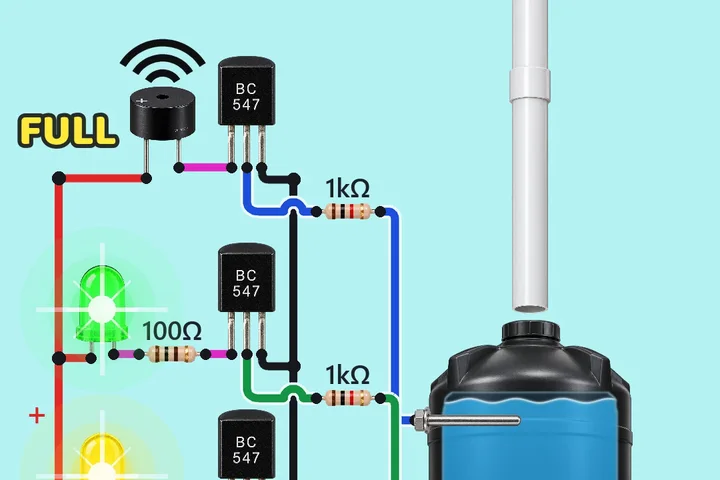 Same buzzerWater level indicator with a buzzer
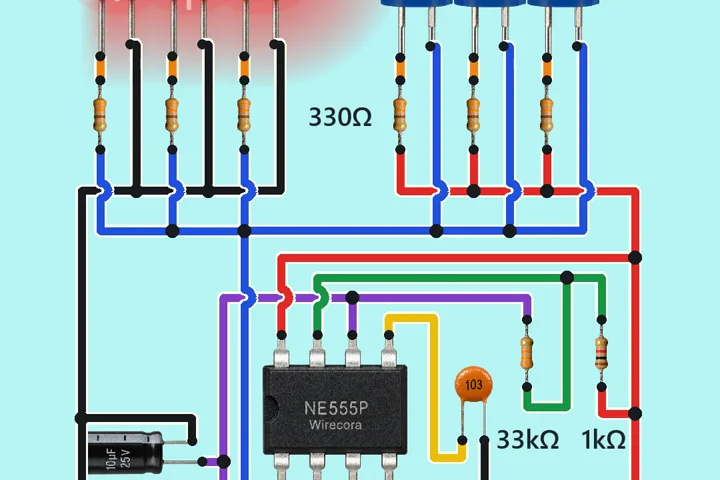 Next step: adds a 555 timerPolice lights with a 555
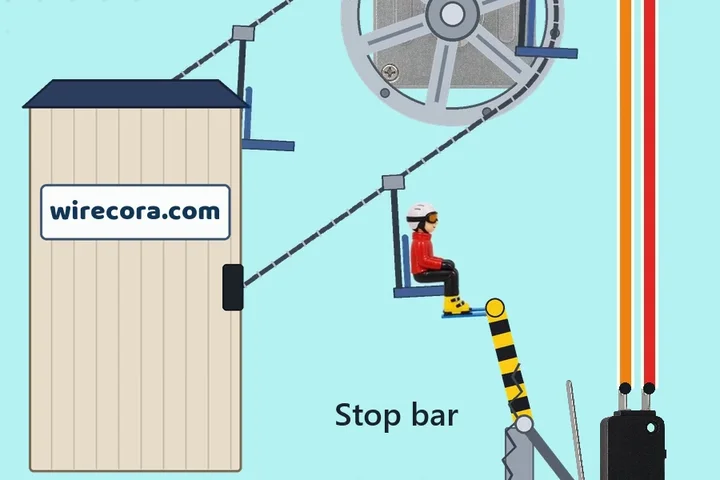 Something new: a motorSki lift stop bar